
Extraction · Drying · Basements · Burst pipes
Connecticut water damage restoration,dried out properly
Water moves fast through a house: under floors, up drywall, down through ceilings and into the basement. Restoration is the work of getting it out, drying what can be saved and removing what cannot, before mold gets a start. One call connects you with an independent restorer who works in your part of Connecticut.
A referral call with no obligation: you hear the plan first and choose whether to proceed.
- Leaks, floods and backupsBurst pipes, basements, sewage, appliance leaks and storm water.
- Independent contractorsLocal restorers who work in your area, not a national call center crew.
- Across covered ConnecticutBridgeport and Stamford to New Haven, Waterbury, Danbury and New London.
Key facts: Home
- Mold can start on wet building materials within a day or two, so drying begins as soon as the water is out [1].
- Professional water damage restoration follows the ANSI/IICRC S500 standard [2].
- Water is classified as clean, gray or black depending on contamination, which changes what can be saved [3].
- Standard homeowners policies generally exclude outside flooding, which flood insurance covers [4].
Services
Restoration services covered on this site
Each page explains how the work is done, what can usually be saved and what to ask the contractor.
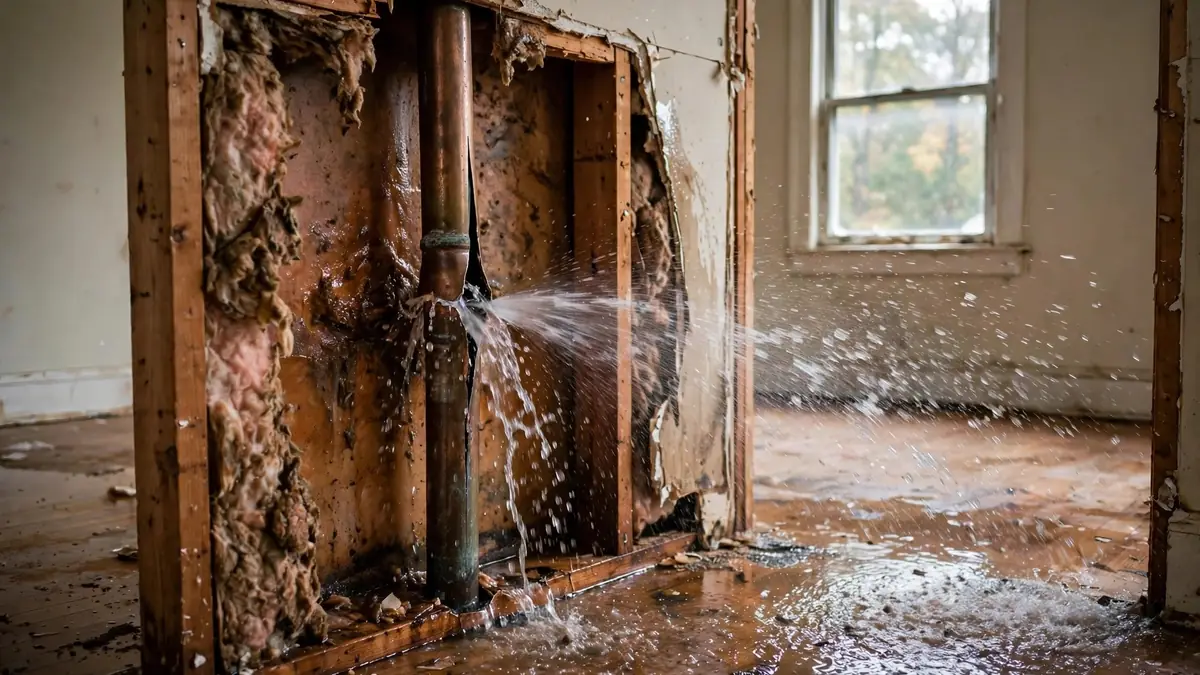
Burst Pipe Water Damage
Frozen and burst pipes, failed supply lines and the soaked ceilings, walls and floors they leave behind.
Explore service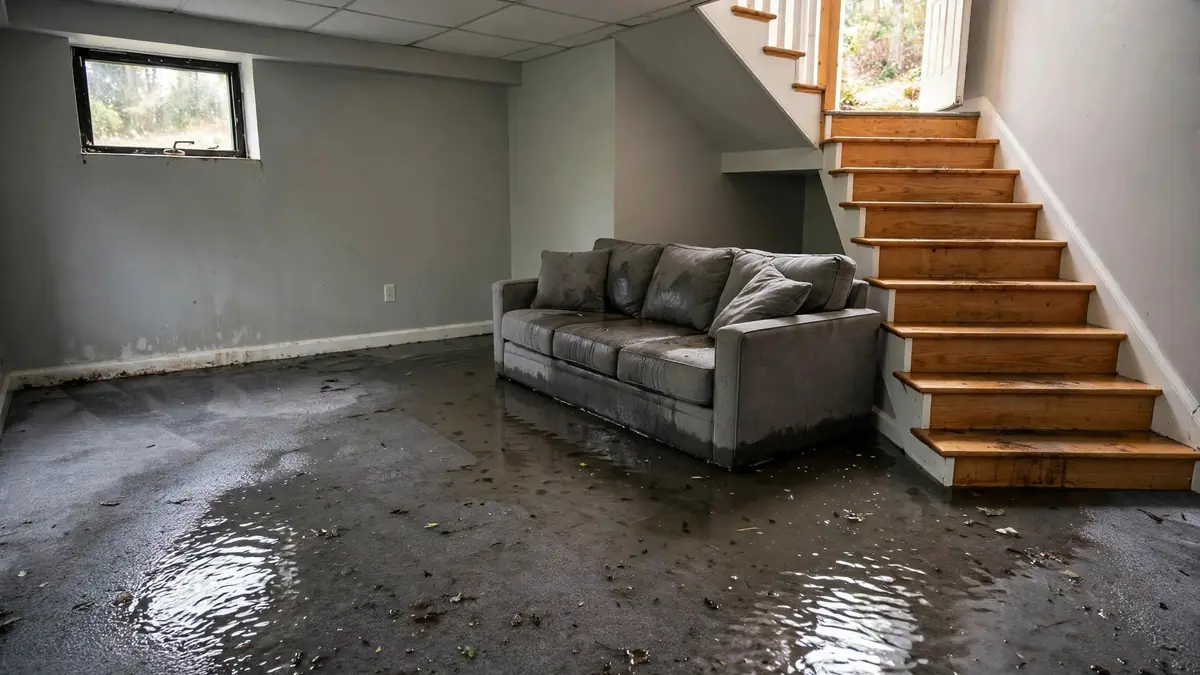
Flooded Basement Cleanup
Water pumped out, contaminated materials removed, the slab and walls cleaned and the basement dried after rain, snowmelt or a failed pump.
Explore service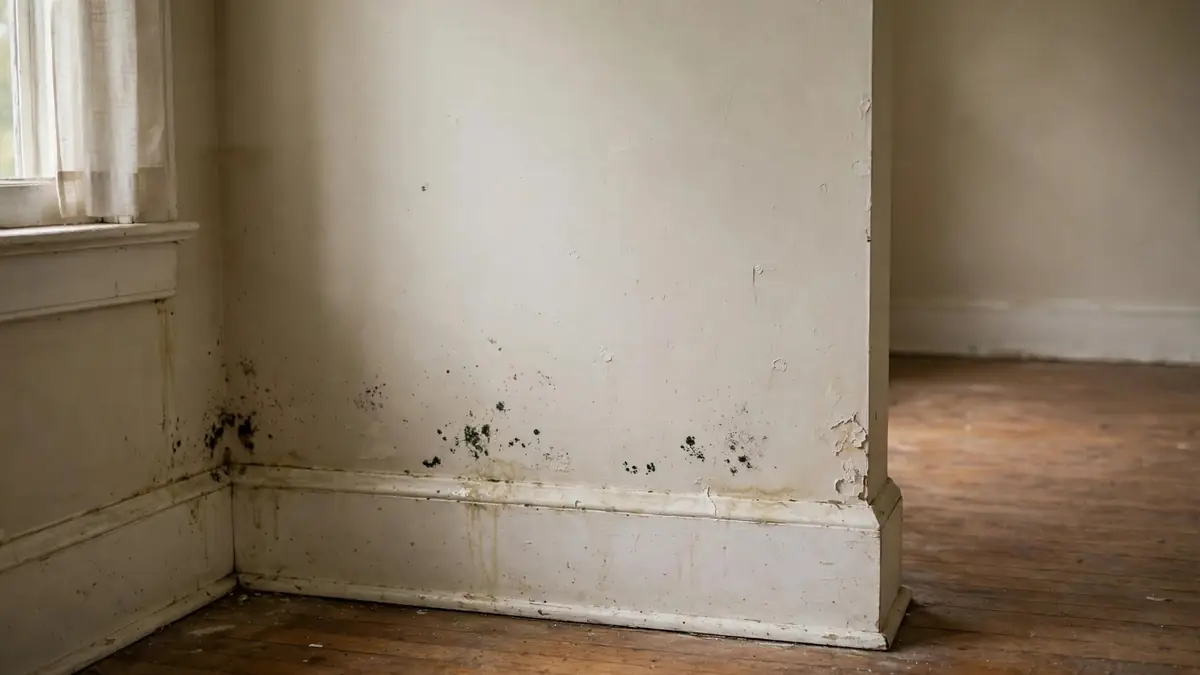
Mold Prevention
Fast drying, removal of materials that will not dry and humidity control so mold never gets a start after a leak or flood.
Explore service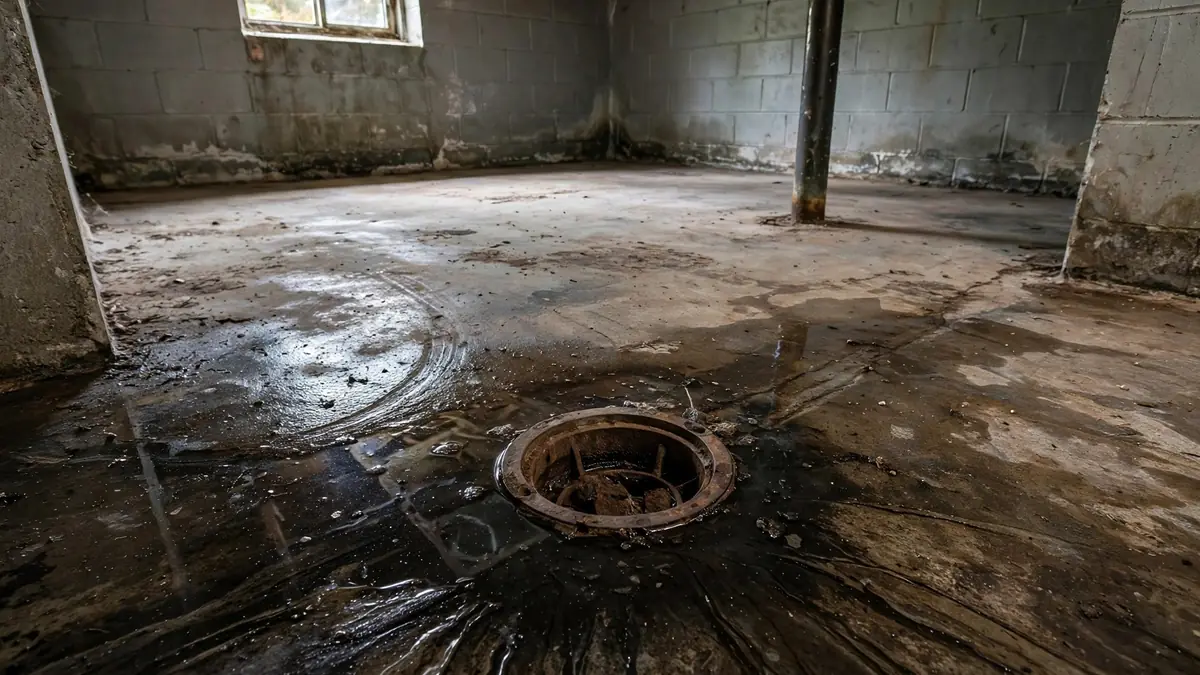
Sewage Backup Cleanup
Black water from floor drains, toilets and sewer surcharges removed, contaminated materials discarded and the area cleaned and disinfected.
Explore service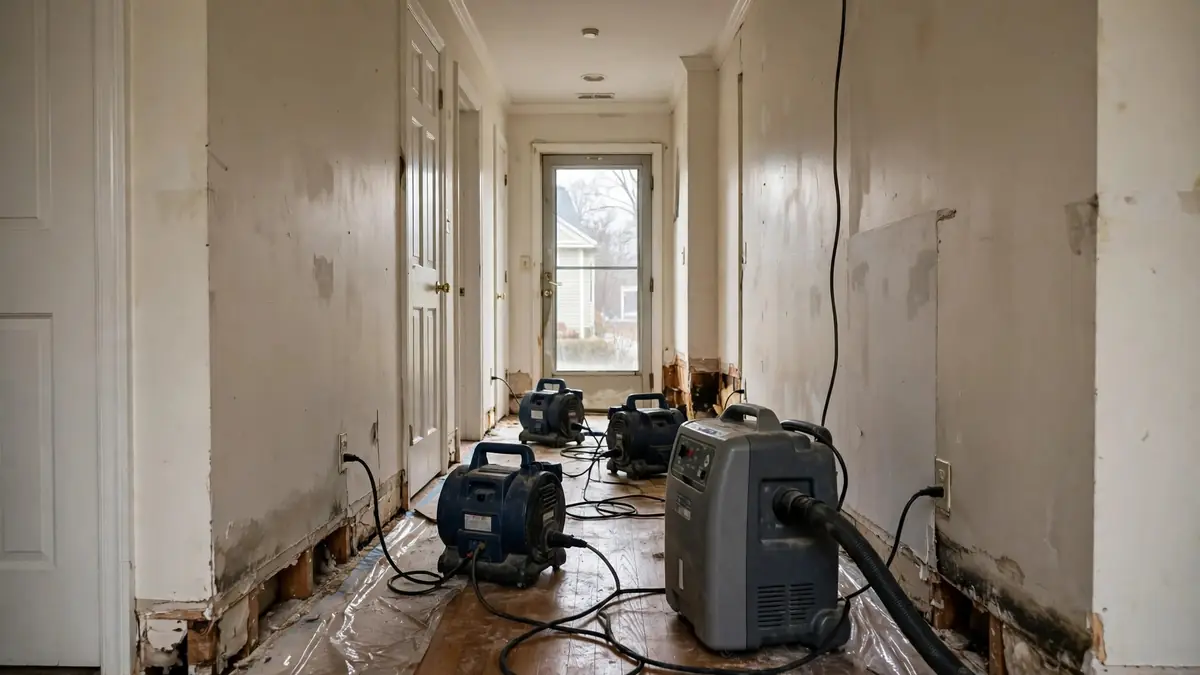
Structural Drying
Air movers and dehumidifiers set up and adjusted from daily moisture readings until walls, framing and subfloor are truly dry.
Explore service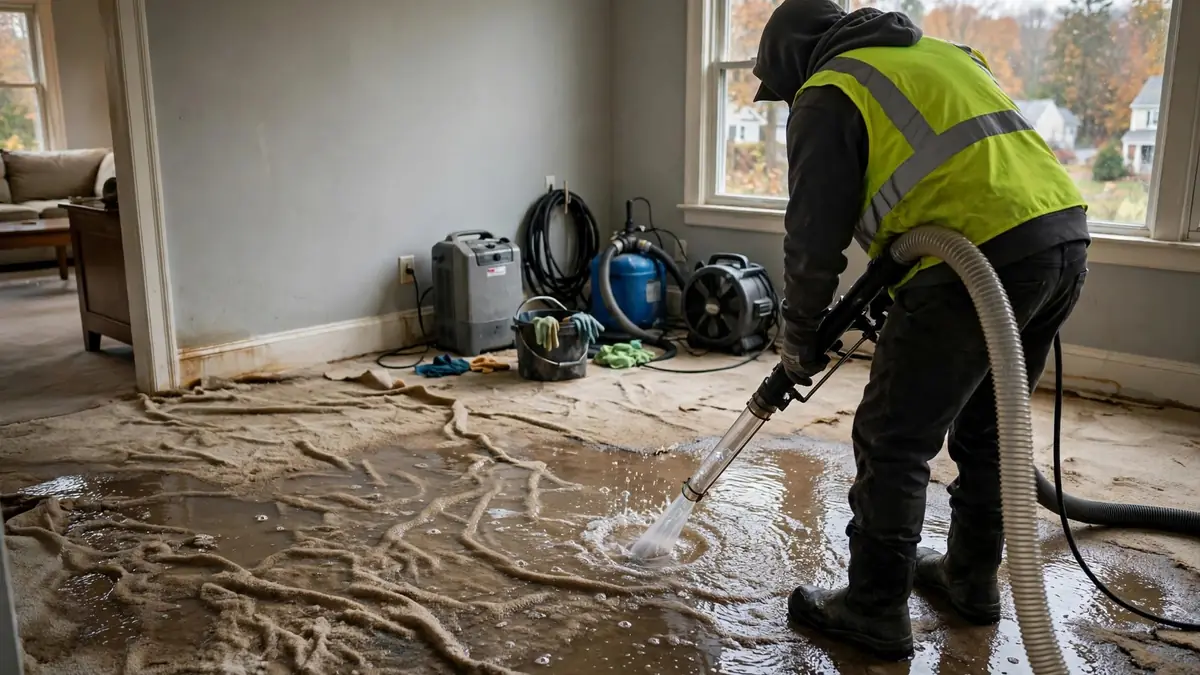
Water Extraction
Standing water pumped and vacuumed out of floors, carpet and basements so drying can actually begin.
Explore service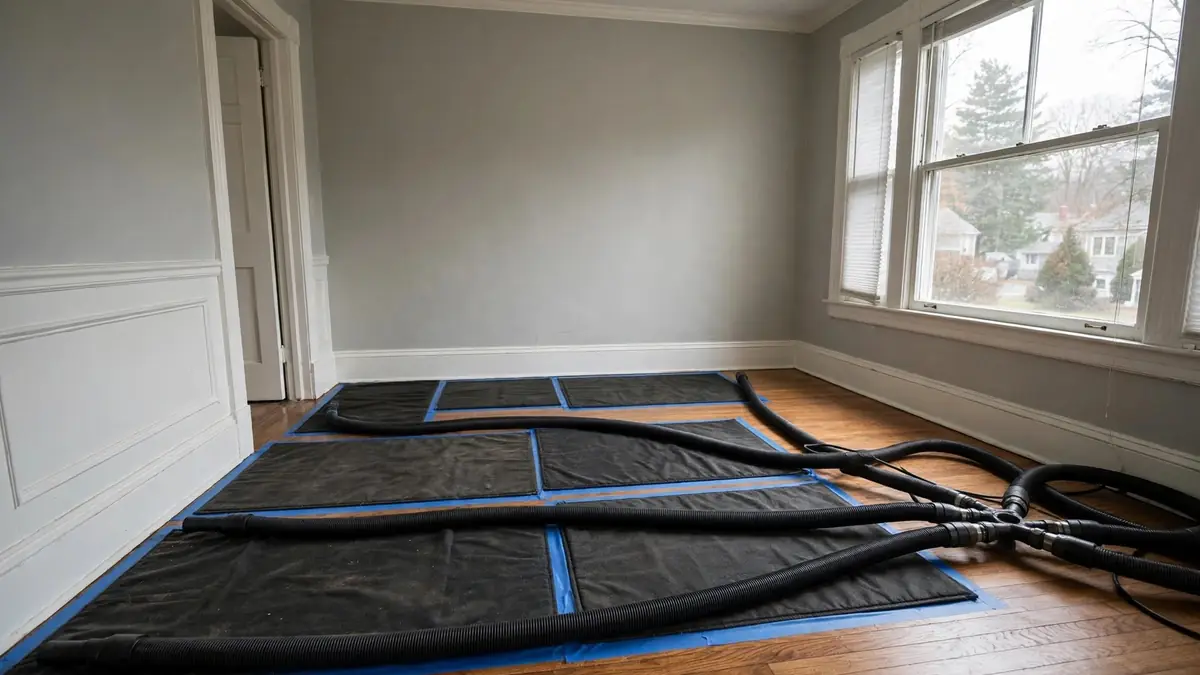
Hardwood Floor Drying
Drying mats, dehumidification and patient monitoring to flatten cupped hardwood instead of tearing it out.
Explore service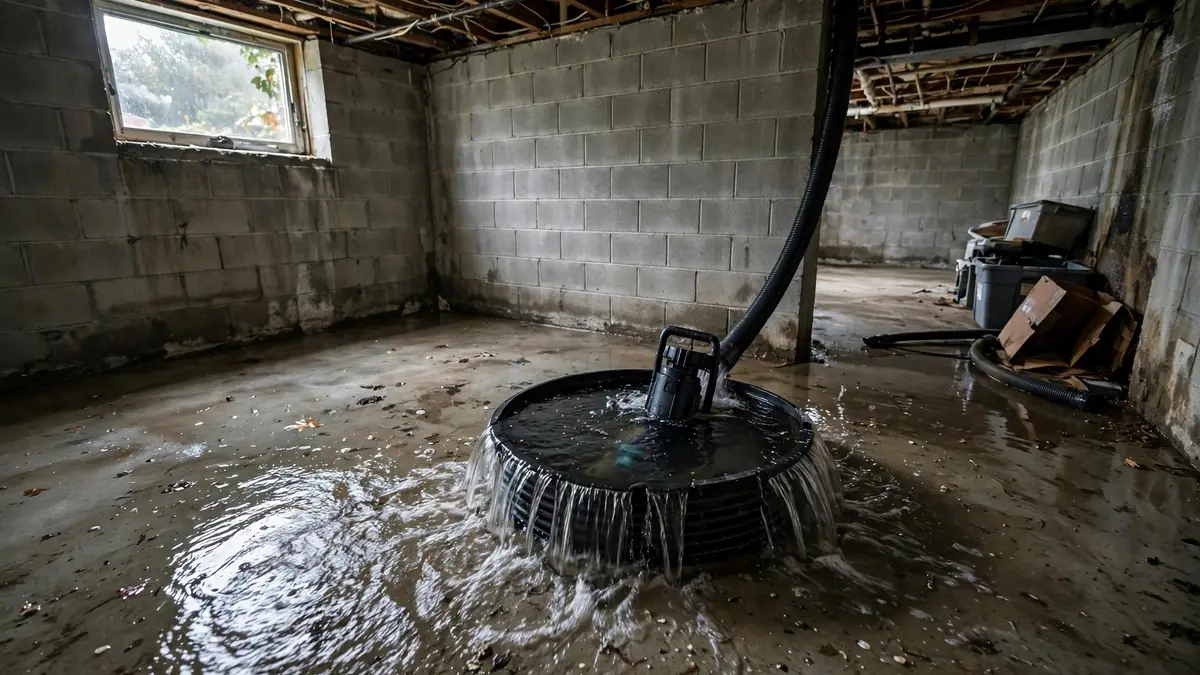
Sump Pump Failure Cleanup
Cleanup and drying after a sump pump loses power, jams or is overwhelmed and the pit overflows into the basement.
Explore service
How restoration works
The order a water damage job follows
Restoration follows a set order. First the source is stopped and the liquid water is removed through water extraction, because pumping water out is far faster than evaporating it. Then materials that will not dry in time, such as carpet pad, soaked insulation and drywall touched by contaminated water, are removed.
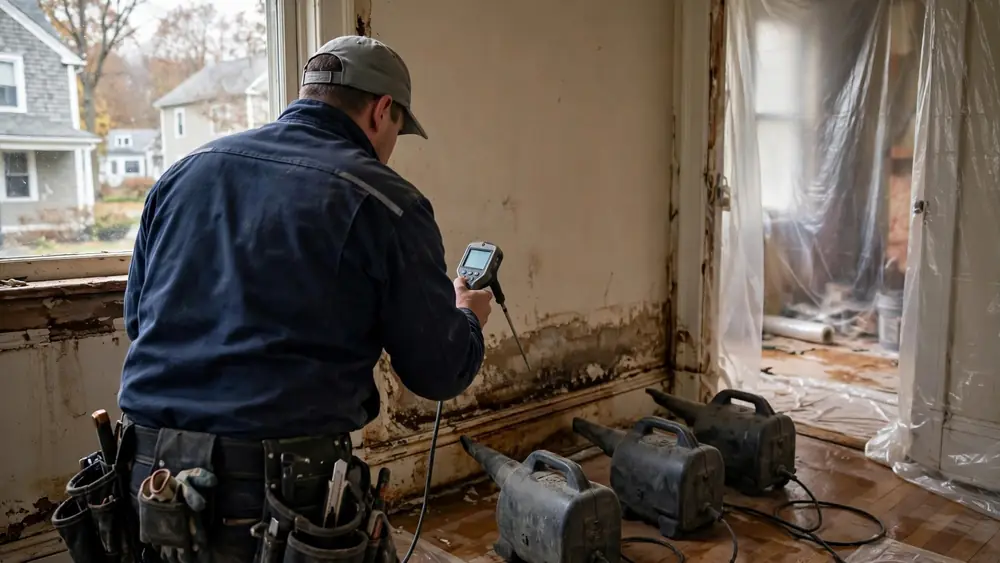
Next comes structural drying: air movers and dehumidifiers run day and night while a technician reads moisture levels each day. When every material matches its normal dry reading, the equipment comes out and repairs begin. Done in that order, most homes are dry in three to five days.
Where to start
What is the water doing in your home?
Pick the tile that matches what is happening. Each one leads to a page on that problem and how it gets fixed.
1 / 6Urgent
Standing water on the floor
Water pooled across rooms or soaked into carpet needs to be pulled out first.
The call
What to cover when you call
- 1
Name the source
A pipe, an appliance, the basement, a drain, the roof or outside flooding.
- 2
Describe what is wet
Which rooms and floors, and whether walls, ceilings, carpet or hardwood are involved.
- 3
Say how long
When it started or when you found it. Time changes what can be saved.
- 4
Ask your questions
About the process, documentation for insurance and what happens next.
- 5
Decide
If you want to go ahead, arrange it directly with the contractor on the call.
Safety checklist
Before anything else
Cleanup can wait a few minutes. These cannot.
- Close the main water valve. On a well, also switch off the well pump breaker.
- Do not step into water that may be touching outlets, cords or appliances.
- Keep everyone out from under a sagging or bulging ceiling.
- Smell gas? Leave the house and call your gas utility and 911 from outside.
Before and after
Connecticut water jobs before and after
Common Connecticut water damage jobs, shown before and after. Example images, not photos of specific jobs.
- BeforeAfter
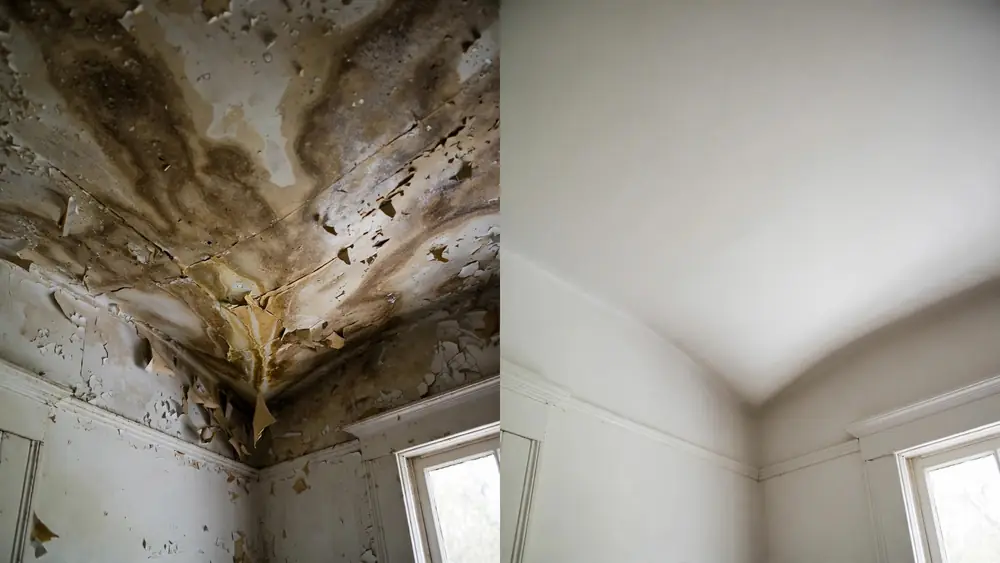
Ceiling after a burst pipe
Wet drywall replaced and painted once the joists were dry.
- BeforeAfter
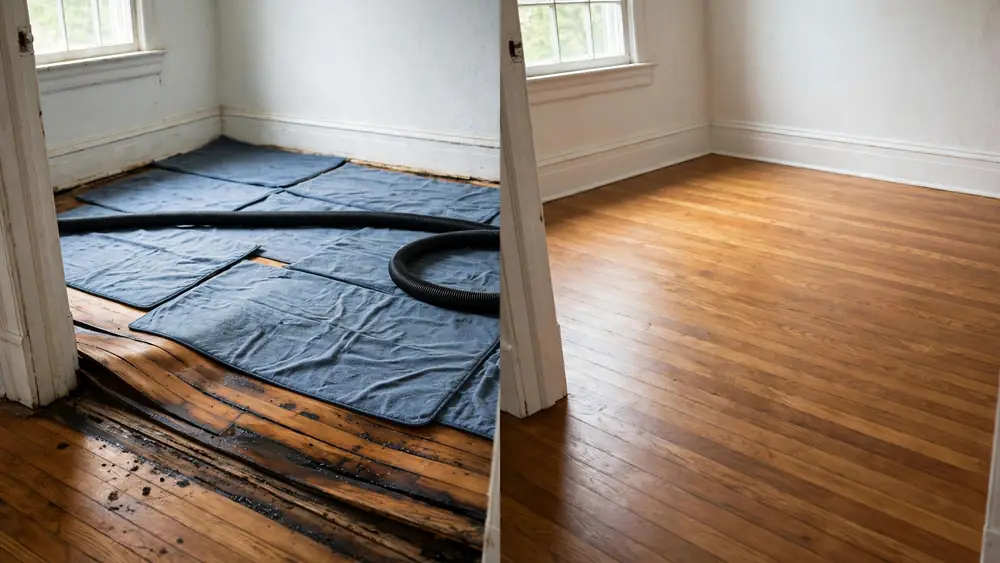
Hardwood floor drying
Drying mats pulled water from below the boards.
- BeforeAfter
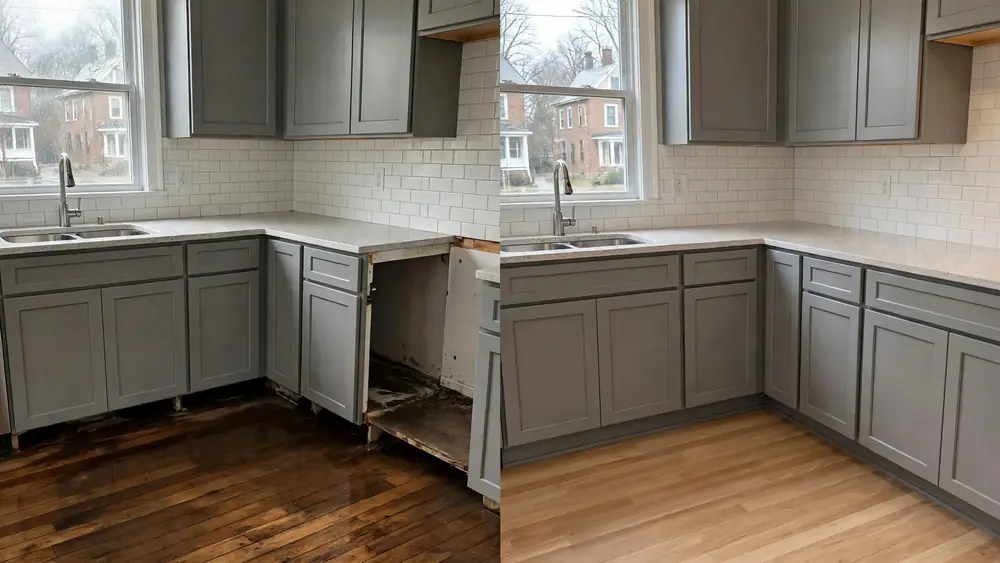
Dishwasher leak
Water under the cabinets was dried before the floor was refinished.
- BeforeAfter
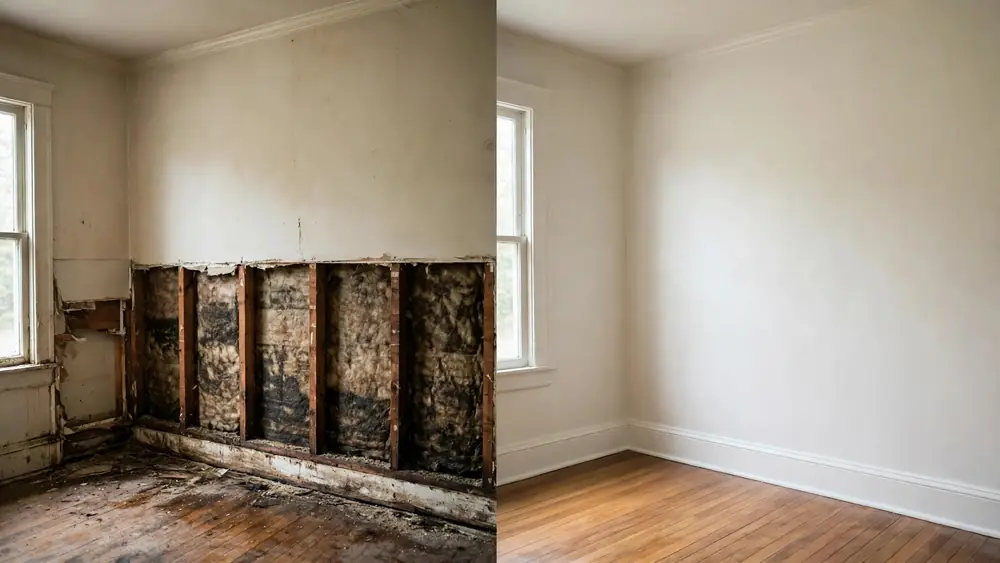
Flood cut and repair
The wet lower section was removed and replaced.
- BeforeAfter
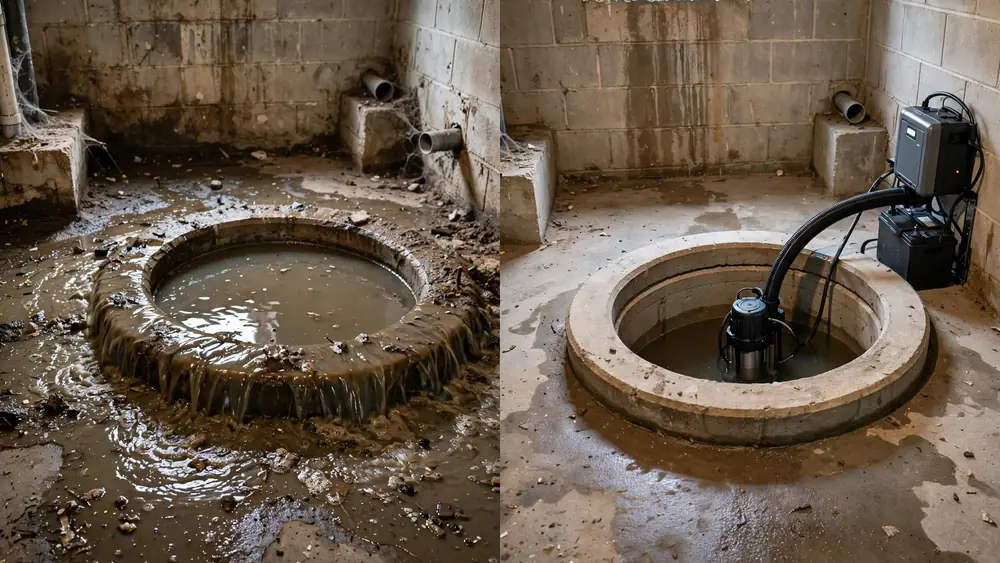
Sump pump overflow
Water removed, basement dried and a backup pump added.
- BeforeAfter
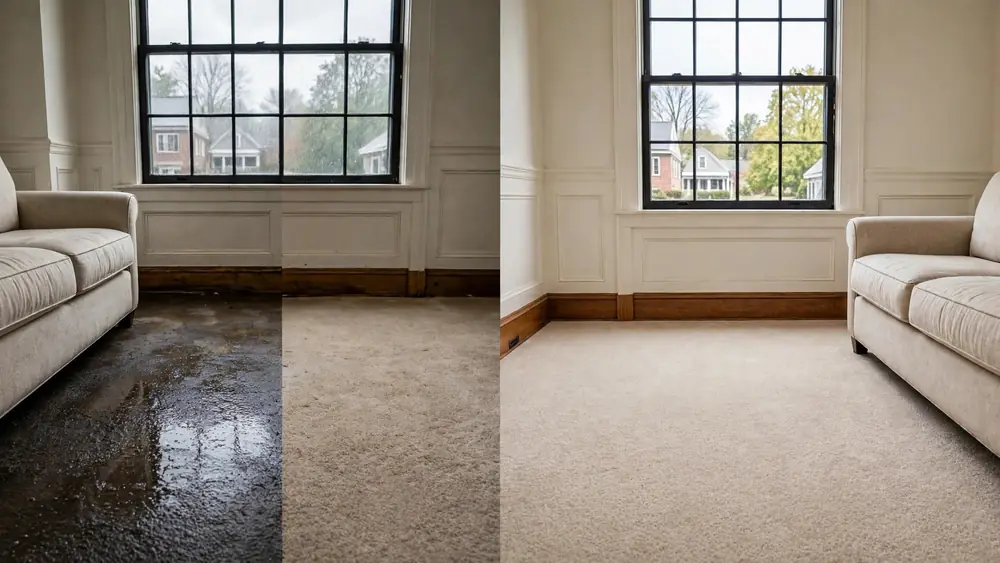
Carpet extraction
Clean-water carpet extracted and dried in place.
Example images, not photos of specific jobs. Every job depends on the property and the damage.
Service areas
Water damage help across covered Connecticut
A Bridgeport three-decker, a Stamford condo, a Waterbury hillside house and a New London shoreline home each get wet in different ways. Our area pages explain the local details.
 Service area
Bridgeport
Connecticut's largest city: harbor shoreline, the Pequonnock River and dense blocks of three-deckers and older multi-family homes.
Learn more Service area
Danbury
Inland western Connecticut on the Still River near Candlewood Lake, with cold winters, wells, septic and finished basements.
Learn more Service area
New Haven
Harbor city on Long Island Sound with the Quinnipiac River, dense older housing, two-families and student rentals.
Learn more Service area
New London and Groton
The Thames River mouth in southeastern Connecticut: harbor neighborhoods, historic waterfront houses and shoreline storms.
Learn more Service area
Norwalk
Norwalk River valley, a working harbor and shoreline neighborhoods, with a long history of river and coastal flooding.
Learn more Service area
Stamford
Shoreline peninsulas, the Mianus and Rippowam rivers, downtown high-rises and older single-family streets in southwestern Connecticut.
Learn more Service area
Waterbury
The Brass City on the Naugatuck River: hilly streets, older multi-family houses and cold inland winters.
Learn more
How this site works
How a call through this site works
This site is a referral line, not a restoration company. When you call, your call is connected to an independent restoration contractor who works in your part of Connecticut and can talk through your situation on that same call.
You decide whether to go ahead, and any agreement is made directly between you and the contractor. Ask how they measure moisture, how they document damage for insurance and what they plan to remove and why.
Before and after
From flooded to dry
A finished basement after water came in, and the same room dried, repaired and refinished.
 BeforeAfter
Decision aid
Dry it, or replace it?
Restorers decide material by material. These are the usual patterns.
| Material | Usually dried and kept when | Usually replaced when |
|---|---|---|
| Drywall | Clean water, firm, dried within about two days | Sagging, contaminated or moldy |
| Carpet | Clean water, extracted quickly | Sewage or floodwater soaked it |
| Carpet pad | Rarely | Almost always after soaking |
| Hardwood floor | Dried early with mats and dehumidifiers | Long soaking, contamination or buckling |
| Plaster | Still attached to the lath | Sagging or loose |
| Insulation | Rarely | Soaked fiberglass or cellulose |
Connecticut specifics
What makes water damage different in Connecticut
Connecticut's weather and housing shape almost every job. Cold winters freeze and split pipes, especially inland around Waterbury and Danbury. Snowy winters bring ice dams that push meltwater into ceilings. Spring thaw and heavy rain raise groundwater against old stone and block foundations. Along Long Island Sound, coastal storms have pushed water ashore more than once, from the 1938 hurricane to Hurricane Sandy in 2012 [5] [6], and the 1955 floods remain the worst in many river valleys [7].
Much of the housing is old: three-deckers and two-families in Bridgeport, New Haven and Waterbury, plaster walls, radiator heat and shared basements. That means water often crosses from one unit into another, and older materials such as plaster and painted trim need careful handling, including attention to lead paint in homes built before 1978 [8].
Outside the cities, many homes rely on private wells, septic systems and sump pumps, which add their own failure points during storms and power outages. A good restorer asks about all of this on the first call.
FAQ
Common questions from Connecticut callers
What should I do first when I find water?
Close the main water valve, keep away from electricity, stay out from under sagging ceilings and take photos. Then call for extraction and drying.
How fast does mold grow after water damage?
Growth can begin within 24 to 48 hours on wet materials, which is why drying should start right away. [1]
Does homeowners insurance cover water damage?
Sudden events like burst pipes are often covered. Outside flooding usually needs flood insurance, and sewer or sump backup often needs an endorsement. [4]
Is this site a restoration company?
No. It is a call-in referral service. Your call is connected to an independent, licensed local contractor, and any agreement is made directly between you and them.
Does this site promise emergency response times?
No. Ask the contractor on your call when they can come out.
Which parts of Connecticut are covered?
Many communities in Fairfield, New Haven, New London and Litchfield counties. See our service areas, and the call confirms your address.
Guides
Guides for the days after a leak or flood
Plain-English guides to the questions people ask first, from first steps to insurance.
 Guide
How long drying takes
Realistic drying times for walls, floors, basements and concrete, and what speeds drying up or slows it down.
Read the guide Guide
Ice dam leaks
Why ice dams form on Connecticut roofs, how they push water into ceilings and walls, and what to do when they leak.
Read the guide Guide
Water damage categories
Clean, gray and black water explained: where each comes from, why it matters and what it means for your home.
Read the guide Guide
Wet drywall: save or replace
How restorers decide whether wet drywall can be dried in place or has to be cut out, and what the signs mean.
Read the guide Guide
What to do after water damage
The first hour, the first day and the first week after a leak or flood, in the order that protects your home and your claim.
Read the guide Guide
Working with your adjuster
How a water damage claim usually works in Connecticut: reporting, documentation, the adjuster visit and where to get help.
Read the guide
Ready when you are
Talk to a Connecticut water damage restorer
Describe where the water came from and what is wet. One call connects you with an independent local contractor who can explain the next steps on that call.
Sources and citations
- [1]U.S. EPA — A brief guide to mold, moisture and your home
- [2]IICRC — ANSI/IICRC S500 Standard for Professional Water Damage Restoration
- [3]Wikipedia — Water damage
- [4]Wikipedia — National Flood Insurance Program
- [5]Wikipedia — 1938 New England hurricane
- [6]Wikipedia — Hurricane Sandy
- [7]Wikipedia — Flood of 1955 (Connecticut)
- [8]U.S. EPA — Protect your family from sources of lead